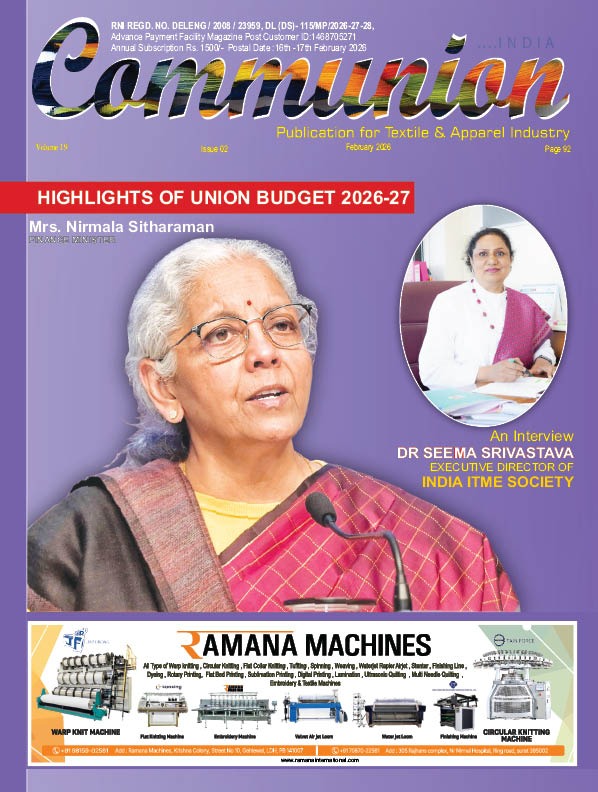

India’s textile industry is looking for new markets to drive its next phase of growth. In this context, the expanded BRICS grouping offers a major but underused opportunity. India’s textile and apparel exports, including handicrafts, reached US$37.75 billion in FY2024-25, growing 5.2% over the previous year. However, India still exports far less to BRICS countries than it imports from them. The overall trade deficit with BRICS is estimated at US$226.1 billion in FY2025-26, highlighting the need to strengthen India’s export presence. The expanded BRICS grouping includes major and emerging markets such as China, UAE, Saudi Arabia, Russia, Brazil, Indonesia, Egypt, South Africa, Iran and Ethiopia. These markets offer significant opportunities for Indian garments, home textiles, cotton products, carpets, man made fibre (MMF) products and technical textiles. The UAE is already a strong example. India’s textile and apparel exports, including handicrafts, to the UAE increased from Rs. 16,720 crore in FY2023-24 to Rs. 20,775 crore in FY2025-26. The UAE can also become a distribution hub for Indian textiles across the Middle East and Africa. Russia, Egypt, Brazil and South Africa offer further opportunities. Russia has potential for Indian cotton garments, knitwear, denim, carpets and home textiles, while Egypt can serve as a gateway to African markets. However, India must move from volume to value. Greater focus is needed on finished garments, MMF products, technical textiles, branded home textiles and sustainable products. India’s MMF exports reached around Rs. 42,688 crore in FY2025-26. With the Government targeting US$100 billion in textile exports by 2030, BRICS can play an important role. Better market access, lower tariffs, faster customs procedures and smoother payment systems will be essential. BRICS should be seen not only as a geopolitical grouping, but as a major economic opportunity to take “Made in India” textiles to new markets.







.png)
.png)